ESB 3.6K3U Review: Tremila 3-Way Speaker System with UMA at ₹69,990

Updated: Jul 8

The ESB 3.6K3U is the flagship of the ESB Tremila 3000 Series — a 3-way speaker system with UMA mid-high unit at ₹69,990 that combines the 3.UMA (1-inch tweeter plus 3.5-inch/90mm midrange in a single A-pillar flange) with the 3.165 6.5-inch/165mm mid-woofer. It can be actively driven from a DSP or finalized with the optional 3.6K3 CX passive crossover, available in standard or HE (high efficiency) versions. Between the entry-tier Duemila 2.6K3U (₹39,990) and the Cinquemila 5.6K3UX (₹1,39,990), the ESB 3.6K3U occupies the position most serious Indian audiophile builders actually buy: real UMA engineering, a genuinely larger midrange, and enough headroom to reward proper amplification.
Key Takeaways
₹69,990 — Tremila 3-way with UMA; the 3.5-inch midrange is the largest in any ESB UMA below the flagship tiers.
System: 3.UMA (1"/25mm tweeter + 3.5"/90mm midrange) + 3.165 6.5" mid-woofer. 4Ω, 65 Hz – 25 kHz.
Crossover optional: 3.6K3 CX (standard) or 3.6K3HE CX (high efficiency version) — or run fully active with DSP.
The larger midrange allows a lower crossover to the woofer than smaller-midrange UMA systems can manage.
ESB 3.6K3U System Specifications
Component | Specification |
|---|---|
System type | 3-way speaker system with UMA |
Composition | 3.UMA + 3.165 |
3.UMA tweeter | 1" / 25mm dome |
3.UMA midrange | 3.5" / 90mm cone |
3.165 mid-woofer | 6.5" / 165mm cone |
Nominal impedance | 4 Ω |
Frequency response | 65 Hz – 25 kHz |
Crossover | Optional: 3.6K3HE CX / 3.6K3 CX |
MRP (India) | ₹69,990 |
Why the 3.5-Inch Midrange Changes the System's Character
The single most important difference between the 3.6K3U and the cheaper Duemila 2.6K3U is midrange cone size: 3.5 inches (90mm) versus 2.5 inches (65mm). That extra centimeter of cone diameter is not a marketing detail — it fundamentally changes what the UMA unit can do in the system.
A midrange driver's lower usable frequency limit is determined largely by cone area. More area moves more air at low frequencies before excursion limits are reached. The 3.5-inch midrange in the 3.UMA extends usefully lower than the Duemila's 2.5-inch unit — which means the crossover point between midrange and woofer can be set lower. Why does that matter? Because the lower the mid-to-woofer crossover, the more of the vocal fundamental range is handled by the A-pillar-mounted midrange instead of the door-mounted woofer. Male vocals have fundamentals down to roughly 100 Hz; a system that crosses at 300 Hz places most of that energy at door level, while a system crossing lower keeps more of the voice anchored at dashboard height. The 3.6K3U's larger midrange raises the soundstage — literally — compared to smaller-midrange 3-way systems.
The UMA Concept in the Tremila Implementation
ESB's UMA (Unità Medio Alti) was conceived in the 1970s to concentrate mid and tweeter emissions in a virtual single point, minimizing phase delays and irregularities at the crossover point. In the 3.UMA, the 1-inch dome tweeter and 3.5-inch midrange share a single mounting flange designed for A-pillar installation. The acoustic result: the mid-to-tweeter crossover region — the 2–5 kHz band where human hearing is most sensitive — is reproduced without the phase interference that separated tweeter-and-midrange installations inevitably produce. Voices sound continuous through the crossover rather than subtly hollowed. Instrument images stay focused instead of smearing when a note crosses from midrange to tweeter territory.
Installation is correspondingly simpler than a conventional 3-way: one A-pillar mounting location instead of two, one flange, one wiring pair to route to the pillar. Left-right consistency is guaranteed because both drivers per side are physically fixed in the same relative position.
Active or Passive: Two Crossover Paths
ESB offers the 3.6K3U without a crossover in the box because serious buyers split into two camps, and forcing either to pay for the other's solution wastes money.
Passive path: add the 3.6K3 CX crossover (or the 3.6K3HE CX high-efficiency variant for lower-power amplifiers). The passive network splits frequencies between the three drivers and lets you drive the whole system from two amplifier channels. Simpler wiring, lower total cost, excellent results with the properly engineered ESB network.
Active path: use a DSP with six output channels (three per side) and dedicate an amplifier channel to each driver. Active operation allows precise crossover frequencies and slopes, individual driver EQ, and — most valuable in a car — per-driver time alignment so the woofer in the door and the UMA on the pillar arrive at your ears simultaneously. For the budget processor entry point, see our Onkyo R-MS66 DSP review. Active setups extract more from this system but need six amp channels and tuning time.
The 3.165 Woofer
The 3.165 6.5-inch mid-woofer anchors the system from 65 Hz up to the midrange handoff. Tremila woofers use ESB's paper cone construction with the series' characteristic warm, natural tonality, mounted in baskets engineered with the self-damping approach ESB applies across the Tremila line. Power handling is generous for the tier, and the woofer benefits obviously from real amplification — this is not a system designed around factory head unit power.
How the 3.6K3U Compares Within the ESB UMA Ladder
Below it: the Duemila 2.6K3U (₹39,990) with 2.5-inch midrange — the affordable entry to UMA. Above it: the Cinquemila 5.6K3UX (₹1,39,990) with 2-inch dome midrange, included CX crossover with level adjustment, and 50 Hz extension; then the EISA-award-winning Ottomila 8.6K3U LE (₹3,49,990) with cellulose fibre drivers. The 3.6K3U at ₹69,990 is the sweet spot where the UMA concept meets a midrange large enough to genuinely lower the crossover point, at a price that leaves budget for the amplification and DSP the system deserves.
Amplification and System Building
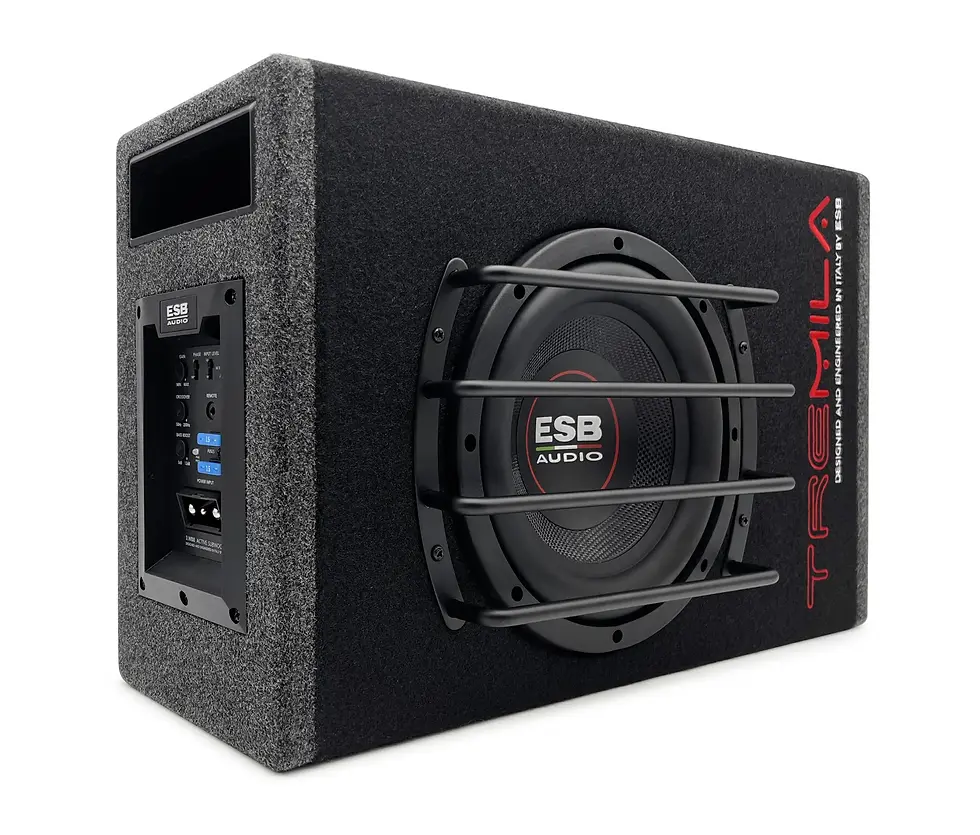
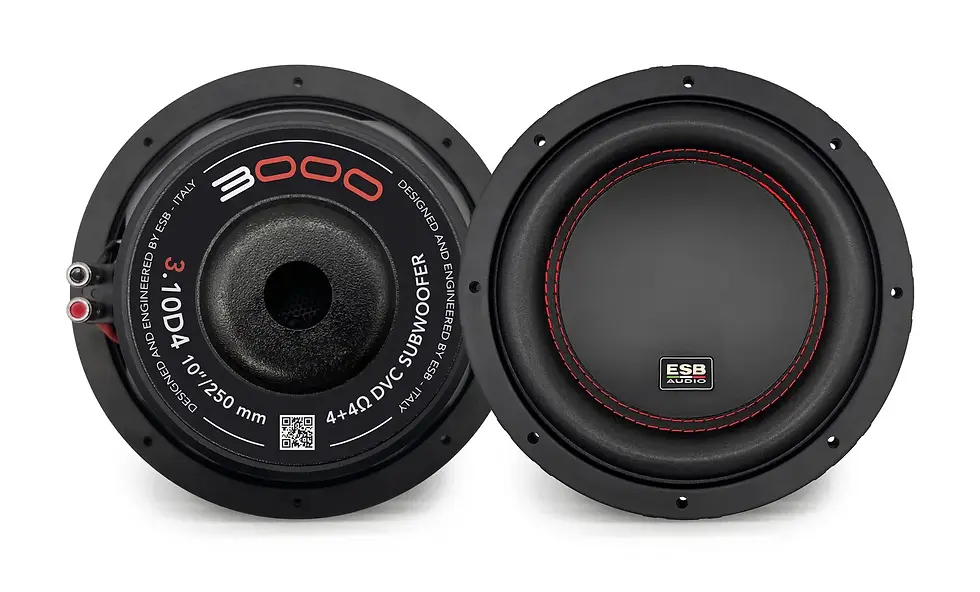
In passive mode, a 2-channel or bridged 4-channel amplifier delivering 100–150W RMS per side into 4Ω drives the full system through the CX crossover. In active mode, plan for six channels: 80–120W for each woofer, 50–80W for each midrange, and 40–60W for each tweeter. Complete the system with a subwoofer — the natural partner is the ESB 3.10D4 or 3.12D4 from the same series. Door deadening at ₹3,000–5,000 per door is mandatory at this system level; a ₹69,990 front stage playing through resonant factory door panels wastes most of what you paid for.
The Bottom Line
The ESB 3.6K3U is the 3-way UMA system for buyers who understand why midrange cone size matters. The 3.5-inch midrange lowers the achievable crossover point, keeping more of the vocal range anchored at A-pillar height where it belongs. The flexible active-or-passive design suits both simple installs and full DSP builds. At ₹69,990, it is the most technically complete front stage in the Tremila 3000 Series and the point in the ESB range where flagship UMA behavior becomes genuinely accessible.
Frequently Asked Questions
What is the difference between the 3.6K3 CX and 3.6K3HE CX crossovers?
The HE (high efficiency) version is voiced for systems running lower amplifier power, preserving output efficiency. The standard CX suits typical amplified installs. Choose based on your amplifier power; your installer or dealer can advise for your specific setup.
Is the ESB 3.6K3U worth ₹30,000 more than the Duemila 2.6K3U?
If you are building a serious front stage with proper amplification, yes — the 3.5-inch midrange versus 2.5-inch is an audible difference in how low the mid crosses and how high the soundstage sits. If budget is tight, the 2.6K3U delivers the same UMA concept at reduced scale.
Can I run the ESB 3.6K3U active without buying any crossover?
Yes — that is exactly how the system is designed. A DSP with six output channels replaces the passive crossover entirely and adds time alignment and per-driver EQ capability the passive network cannot provide.

Comments