Recoil MS275 Review: 2.75-Inch Sky Channel Midrange Speakers for Overhead Installs

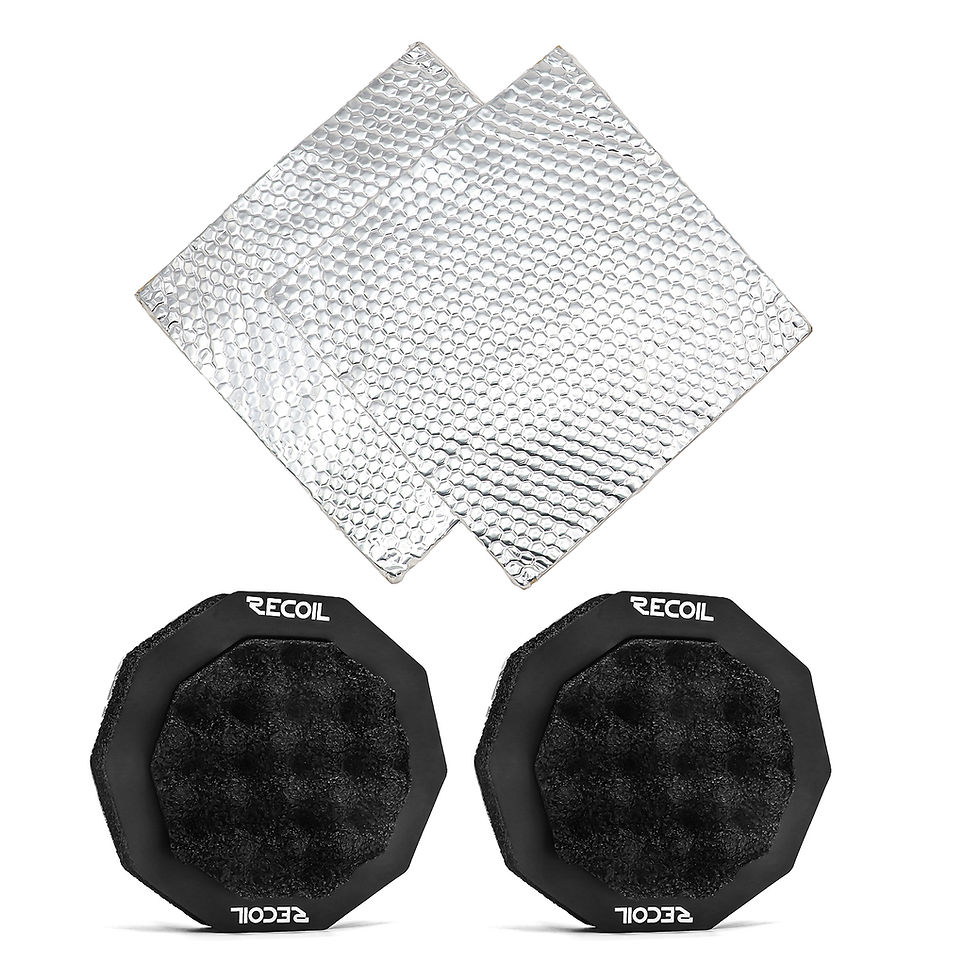
The Recoil MS275 is a pair of 2.75-inch midrange speakers that Recoil designs for sky channels, meaning the overhead speakers in a surround system with height channels. Recoil rates them at 50 W RMS and 100 W max for the pair, with a 225 Hz to 20 kHz range, 80 dB sensitivity and a depth of 0.71 inch. The Indian MRP is ₹14,000 for the pair, and our listing says they are for use with DSP amplifiers. They suit an installer-led build with spare amplifier channels rather than a simple speaker swap. You can see them on our Recoil MS275 product page.

Key takeaways
Recoil rates 50 W RMS and 100 W max for the pair, not for each speaker. Shared evenly, that is about 25 W RMS each.
The 80 dB sensitivity means the amplifier channel does more of the work, so plan clean power rather than a weak channel.
The listed depth is 0.71 inch, about 18 mm, but no cutout diameter is published.
Neither Recoil's page nor our listing text names a surround format. The speaker plays whatever signal your processor sends it.
Recoil MS275 specifications
Specification | Recoil MS275 |
|---|---|
Type | 2.75 in sky channel midrange speakers, sold as a pair |
Power handling, pair | 50 W RMS / 100 W max |
Impedance | 4 ohm |
Sensitivity | 80 dB (test conditions not stated) |
Frequency response | 225 Hz – 20 kHz |
Diaphragm and cone | Aluminium diaphragm, fibreglass cone |
Magnet | N42 neodymium |
Housing and grille | Machined aluminium housing, stainless steel grille |
Depth | 0.71 in (about 18 mm) |
Cutout, weight, box contents | Not published |
India MRP | ₹14,000 per pair |
Figures come from Recoil's MS275 page, which is promotional, and from our listing. The two agree.
What sky channels are, and what the MS275 does
In a surround system with height channels, sky channels are the overhead channels that carry height effects, such as rain or a helicopter passing over. Recoil describes the MS275 as engineered exclusively for that job and designed for ceiling-mounted installs. Remember what that means in a car: the speaker is still a small midrange driver. The effect comes from the source material and the processor that creates the overhead signal, and the speaker only plays what it is sent.
Check which format your processor supports instead of assuming anything from the speaker. Neither Recoil's page nor our listing text names a format, although the web address of our product page mentions Dolby Atmos.
80 dB and 4 ohm: what the amplifier has to do
Sensitivity is quoted in decibels, and every 3 dB lower means about double the amplifier power for the same level. A speaker rated 10 dB lower needs about ten times the power. At 80 dB the MS275 asks more of its amplifier channel than a more sensitive speaker would, and Recoil does not state the test conditions behind the figure, so treat it as a rough guide.
Our listing says the MS275 is for use with DSP amplifiers, and Recoil's page says it pairs easily with most of them. A multi-channel unit gives each overhead speaker its own channel, gain and filter. Two we list are the Recoil S810, with eight outputs at 25 W RMS and two at 100 W RMS into 4 ohm, and the Recoil R46, with four amplified channels at 25 W RMS into 4 ohm at 14.4 V. Both list gain, phase and time delay control on each channel. A 25 W RMS channel also matches an even split of the MS275's pair rating, which is a tidy fit on paper.
Because the MS275's range starts at 225 Hz, set the high-pass at or above that point. The exact setting depends on the processing and the install.
Fitting a 0.71-inch speaker in a roof
A depth of about 18 mm is shallow, and Recoil says the low-profile design and stainless steel grille are meant to blend into ceilings. What Recoil does not publish is a cutout diameter, weight or box contents, so get those from the maker or distributor, or measure the unit in hand, before you touch a headliner.
Behind a car's roof lining there may be a sunroof cassette, roof bows, wiring, grab-handle brackets and, in many cars, side-curtain airbags. The speaker position has to avoid all of them, so leave airbag zones alone. Roof panels can also get very hot in an Indian summer, so fix the speakers properly instead of relying on tape.
What owners and reviewers say about the Recoil MS275
When we checked in October 2026, Recoil's own MS275 page showed no customer reviews, and our listing carries a New Arrival label. We found no independent review, forum thread or test report, and our research could not reach some retailer and forum sites, so this is a limit on what we can verify, not a verdict.
Leaving that gap visible is better than guessing at a consensus. If you have fitted a pair, leave a comment with your car, your processor and where you placed them.
Recoil MS275 vs MC25
A different Recoil midrange in our store for custom builds is the Recoil MC25, a pod design that our listing says suits 3-way, satellite or centre-speaker use. It is sold per piece at ₹8,000 MRP, with a listed 25 W RMS and 50 W peak, so a left-and-right pair means buying two while a single centre speaker needs one. The MS275 is sold as a pair at ₹14,000 MRP.
The MC25 listing gives no size, impedance, sensitivity or frequency range, so the MS275 is the better documented of the two. They are described for different jobs: one for overhead use, the other as a pod.
Who should buy it, and who shouldn't
Buy the MS275 if you are building a multi-channel DSP system with spare amplifier channels, you want shallow roof-mounted speakers, and an installer will plan the signal path.
Look elsewhere if you want a front-door upgrade, since the range starts at 225 Hz and Recoil describes the speaker for overhead use. It is also the wrong choice if you have a stereo head unit with no processor or spare channels, or if you need a published cutout size before you order. Our guide to why car audio systems need a DSP explains why the processing matters.
Installation notes for Indian cars
This is a job for an installer. Pulling a headliner, routing speaker wire down the pillars and choosing positions away from airbags and roof structure all take care. VA3 Car Studio in Ghaziabad offers professional installation, builds custom speaker pods and baffles if a mounting surface needs one, and does DSP tuning for the filters and levels.
Tell the installer the speakers are rated per pair and that the listed range starts at 225 Hz, so the high-pass is set before any music plays.
Price and where to buy
The Recoil MS275 carries an MRP of ₹14,000 for the pair in our listing. VA3 Car Studio often sells below MRP, so check the current offer on the Recoil MS275 product page. We list it as a genuine Recoil product. Recoil's warranty page sets a one-year limited warranty for the original purchaser and does not state India terms, so confirm them with the maker or distributor before you order.

The bottom line
The MS275 is a documented, shallow 2.75-inch speaker for overhead channels, with a clear pair rating and a stainless steel grille. It needs amplifier channels, a processor and an installer to be worth buying. Its low sensitivity, missing cutout size and lack of owner feedback are reasons to plan carefully, not to guess.
Recoil MS275 FAQ
Does the Recoil MS275 support Dolby Atmos?
Neither Recoil's page nor our listing text names Dolby Atmos or any other format, although the web address of our product page mentions Dolby Atmos. A speaker only plays the signal it is given, so format support depends on your source and processor.
Is the 50 W RMS rating for each Recoil MS275 speaker?
No. Recoil gives 50 W RMS and 100 W max for the pair. If the two share it evenly that is about 25 W RMS each, and the 100 W max is a short-burst limit, not a level to run at.
Do I need a DSP amplifier for the Recoil MS275?
Our listing says the speakers are for use with DSP amplifiers, and Recoil says they pair easily with most. You need spare amplifier channels and a way to filter and level them, which a multi-channel DSP provides.
How deep is the Recoil MS275?
The listed depth is 0.71 inch, about 18 mm. Recoil does not publish a cutout diameter, so confirm that before cutting a headliner.


Comments